News
Hot idea: Peter's AAU-research turned into an AI-company
Published online: 27.11.2025

News
Hot idea: Peter's AAU-research turned into an AI-company
Published online: 27.11.2025
AAU-research turned into the AI-company CEDAR
News
Published online: 27.11.2025
News
Published online: 27.11.2025
By Peter Witten, AAU Communication and Public Affairs
It may sound simple: Replace your oil or gas boiler with a heat pump and get cheap, green heating. But can the power grid handle all of us using electricity at the same time? And does the heat pump really need to run during the most expensive hours?
Those questions motivated Associate Professor Peter Gjøl Jensen from Department of Computer Science, Aalborg University, who realized his idea from AAU with intelligent heat pump control.
This became the AI-company CEDAR, founded together with research colleague Kenneth Yrke Jørgensen. Today, their product - integrated into a small control unit - is used in both homes and businesses.
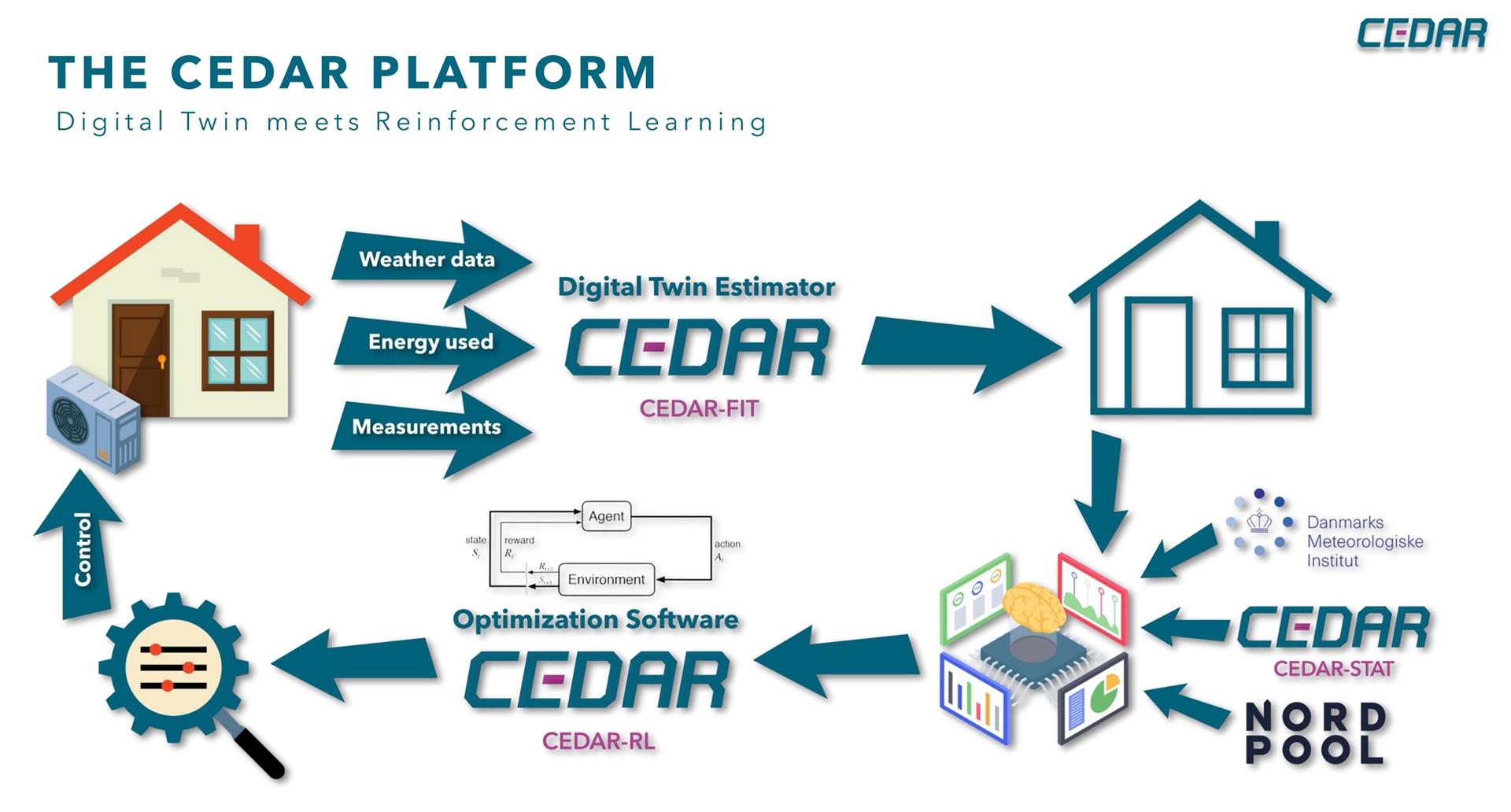
CEDAR provides AI-based control for heat pumps in private homes and small to medium-sized businesses.
The operation of the heat pump is automatically shifted to times when electricity prices are lowest. At the same time, indoor and outdoor temperatures and weather forecasts are taken into account. Under ideal conditions, homeowners' electricity costs for running the heat pump can be roughly halved through AI control.
"It's easy enough to save money - just turn off the heat pump," explains Peter Gjøl Jensen.
"The point is to save money without compromising comfort, and that's what our solution does. Our algorithms learn to understand how slowly underfloor heating responds in the house," he adds.
Peter Gjøl Jensen founded the company almost two years ago but has worked on the project for three years, the first part at AAU Innovate under an InnoExplorer project funded by the Innovation Fund.
"It was great to be at Innovate and have an office away from my regular research. It gave me time to focus on building something that could become a business and concentrate on marketability and customer journeys," he says. And adds:
"The biggest change is stopping yourself from thinking 'can we make it better?' and instead thinking 'does this create tangible added value for our end users?'"
"Our core technology is very flexible, but it has been just as important to understand the environment and the people the algorithms and solutions are meant to serve. Two houses with two families are never the same, so they need personalized and localized optimization," says Peter Gjøl Jensen.
"It's not just the heat pump owner who has an interest in it. Service technicians want to be notified before it breaks down, manufacturers want to improve lifespan, and grid operators want to shift electricity consumption away from peak hours - the times when we use the most electricity," he explains.
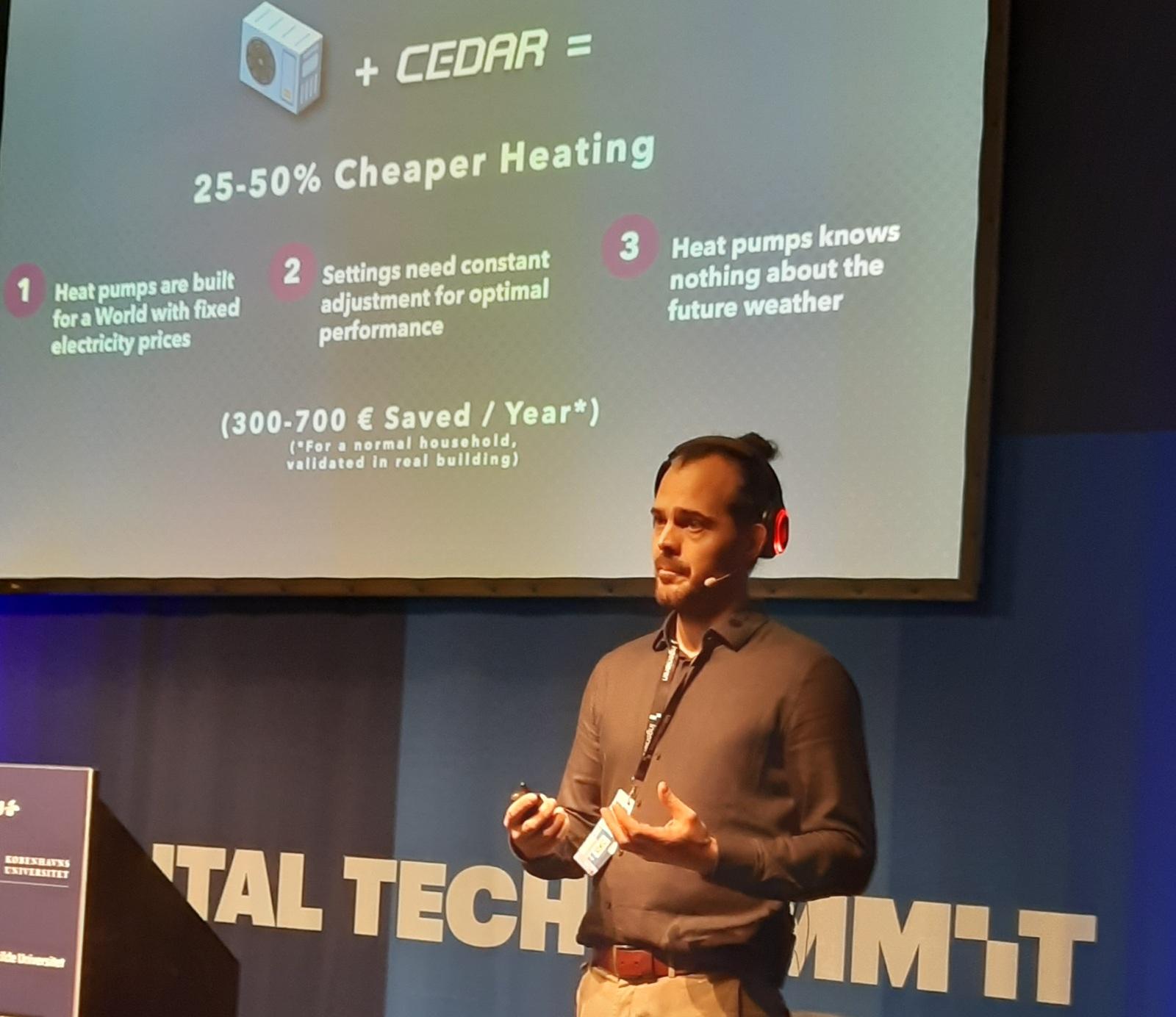
The company's platform is designed to target areas where large 'one-size-fits-all' solutions don't work and to support all stakeholders in the heat pump ecosystem.
Running a spin-out company like CEDAR is hard work with long-term goals and ongoing development:
"We started the company with solid technology behind us, but we also learned that this alone isn't enough to reach the customer. We've repeatedly moved closer to the end user and learned to understand the ecosystem and decision-making processes around heat pumps. Initially, we expected to sell the technology as a pure software platform to manufacturers. Now we've instead built a complete mini Building Management System (BMS) platform with integrated optimization, monitoring, and data collection. It takes time to get in place, but it seems to be paying off now," says Peter Gjøl Jensen.
"It makes for long workdays. But it's incredibly motivating to see that our research and work can make a big difference - even for ordinary citizens," he adds.
Contact